
A large part of the territory of the Southwestern State Enterprise is occupied by artificially created Scots pine cultures, which are located outside their natural range. In view of climate change, their transformation is imperative. This was also the topic of the seminar that took part the end of June, organized by WWF and held within the framework of the project “CLIMAFORCEE LIFE project – CCA/SK/001276.
The one-day seminar consisted of a theoretical and practical part and was held on the territory of the State Forest Unit – Vitoshko-Studena. The Forest Unit is part of the project, and it implements activities on the transformation of artificially created pine forest cultures.
During the theoretical part, detailed recommended measures for the management of Scots pine cultures were discussed, depending on their ecosystem compatibility and health status. Ecosystem compatibility is assessed based on productivity – close to the maximum for the conditions, regeneration – natural and successful, and stability to biotic and abiotic factors. The development of measures to be included in the upcoming new forest management plans includes various activities for the transformation of Scots pine cultures aimed at improving the structure, productivity, mechanical resistance of the forest and its overall health status.
Key measures include timely implementation of thinning activities, stimulation of natural regeneration with native tree species, afforestation in areas where there is no good regeneration, as well as carrying out sanitary logging to extract trees affected by the drought.
Attention was drawn to the increasing frequency of natural disturbances that lead to the deterioration of the condition of forests – intensive rains, strong winds and secondary reasons such as various biotic factors and the increasing share of forest fires. The deterioration leads to a decrease in the productivity and quality of the ecosystem benefits provided by forests and loss of biodiversity.
Another main topic were the current challenges facing forest management, such as: the financing model, people’s increased expectations of forests and that they should not be perceived only as a source of timber and that a balance should be sought between economic, social and environmental benefits.
The adaptation of forests to climate change and the improvement of the condition of forests is also part of the European legislation – the National Restoration Plan.
Currently, specific measures are being developed within the project for three Forest Management Units in the territory of the SWSFE – the Vitoshko-Studena, Kyustendil and Dupnitsa, but soon similar measures will have to be developed for forests throughout the country.
The measures were presented by Assoc. Prof. Dr. Neno Alexandrov, who shared that back in 2020, an assessment was made of the condition of Scots pine cultures on the territory of the SWSFE.
According to this assessment, artificial pine forests below 1000m are affected to the greatest extent. Young and middle-aged plantations are characterized by the highest percentage of damage. Forests of up to 50 years are characterized by low mechanical stability.
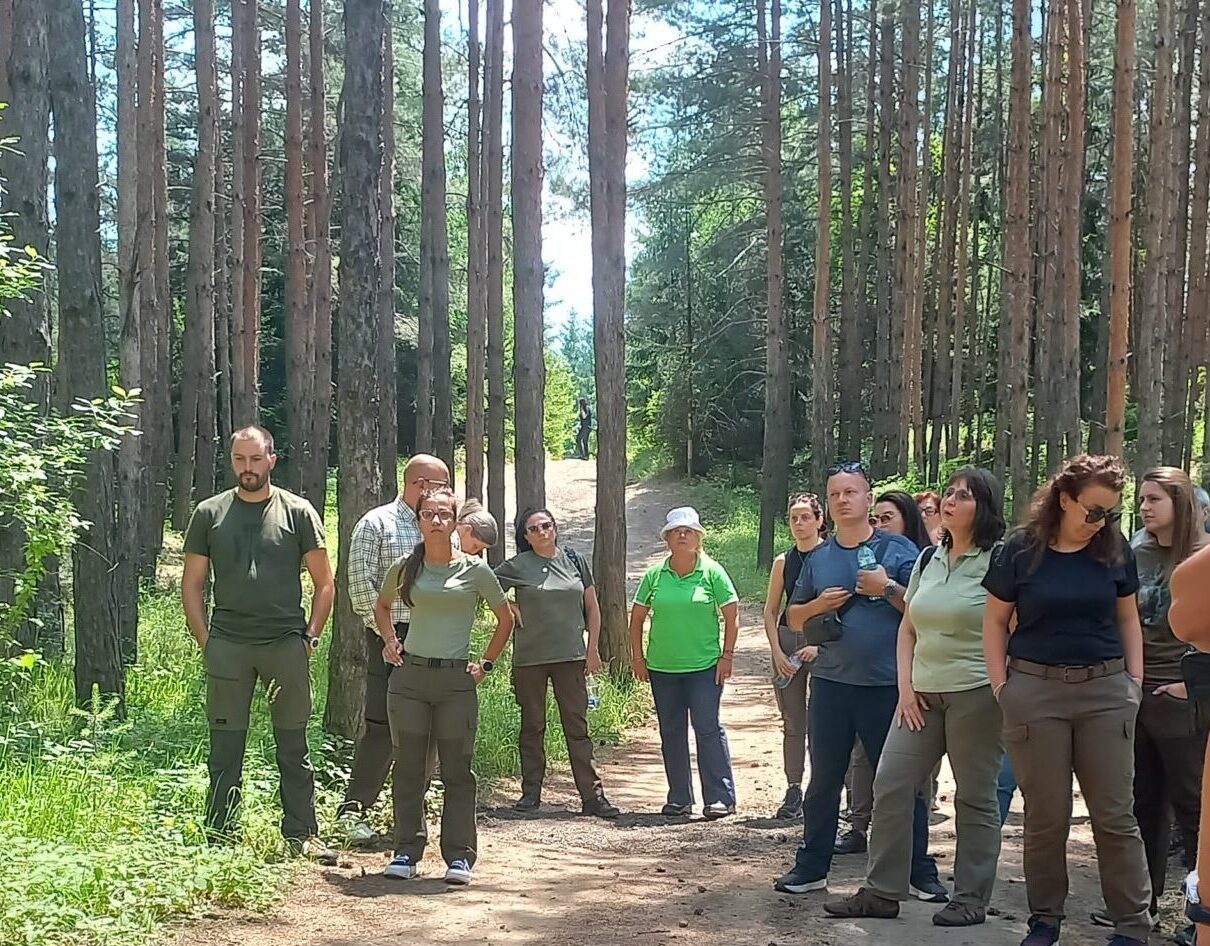
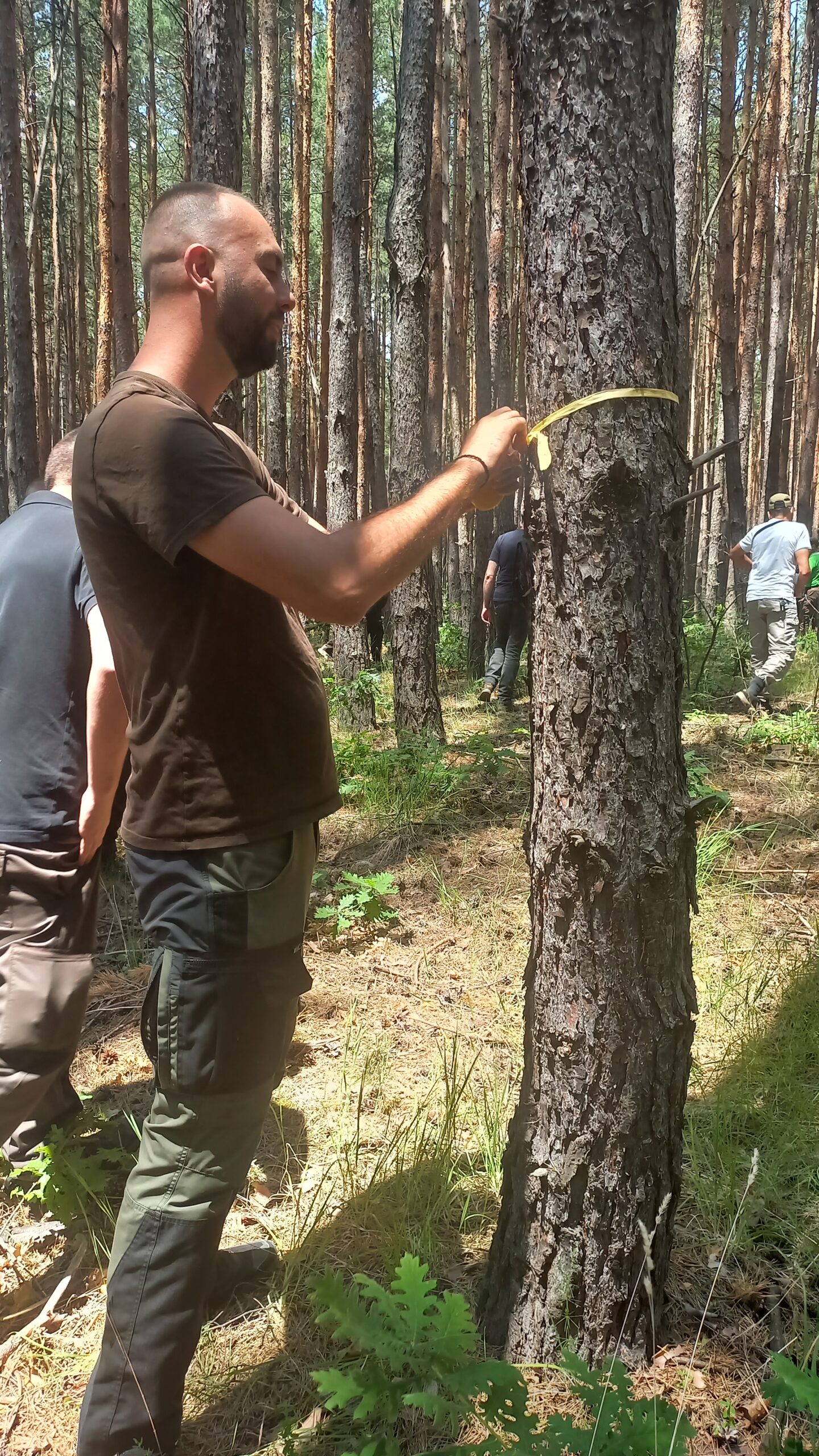
The practical part included a field visit to two plots with artificial pine forests, which were assessed as relatively good ecosystem compliance. Silvicultural activities were carried out in one of them, and not in the other. Specific activities that can be implemented were discussed, and the participants also had a practical task for marking trees.