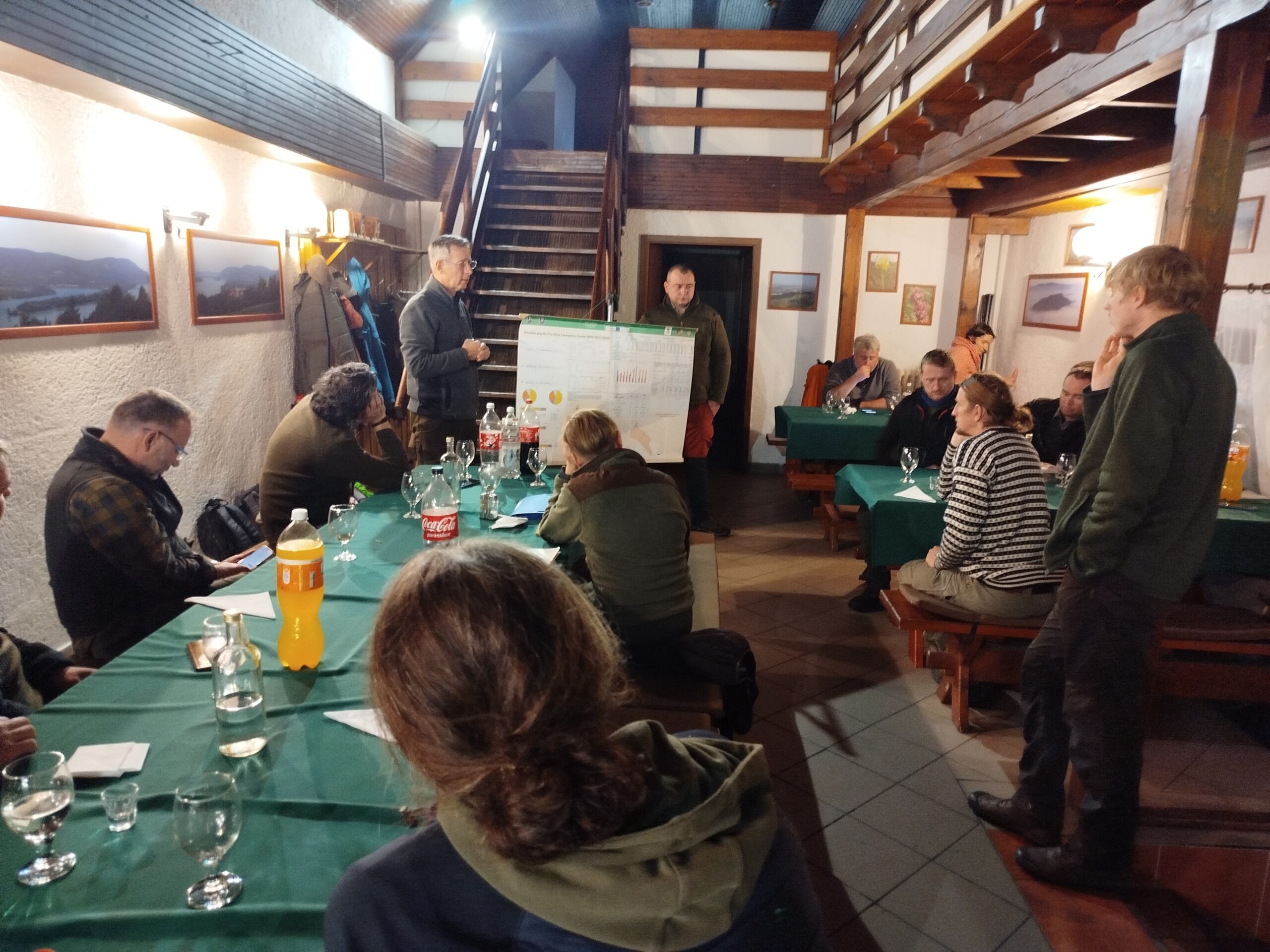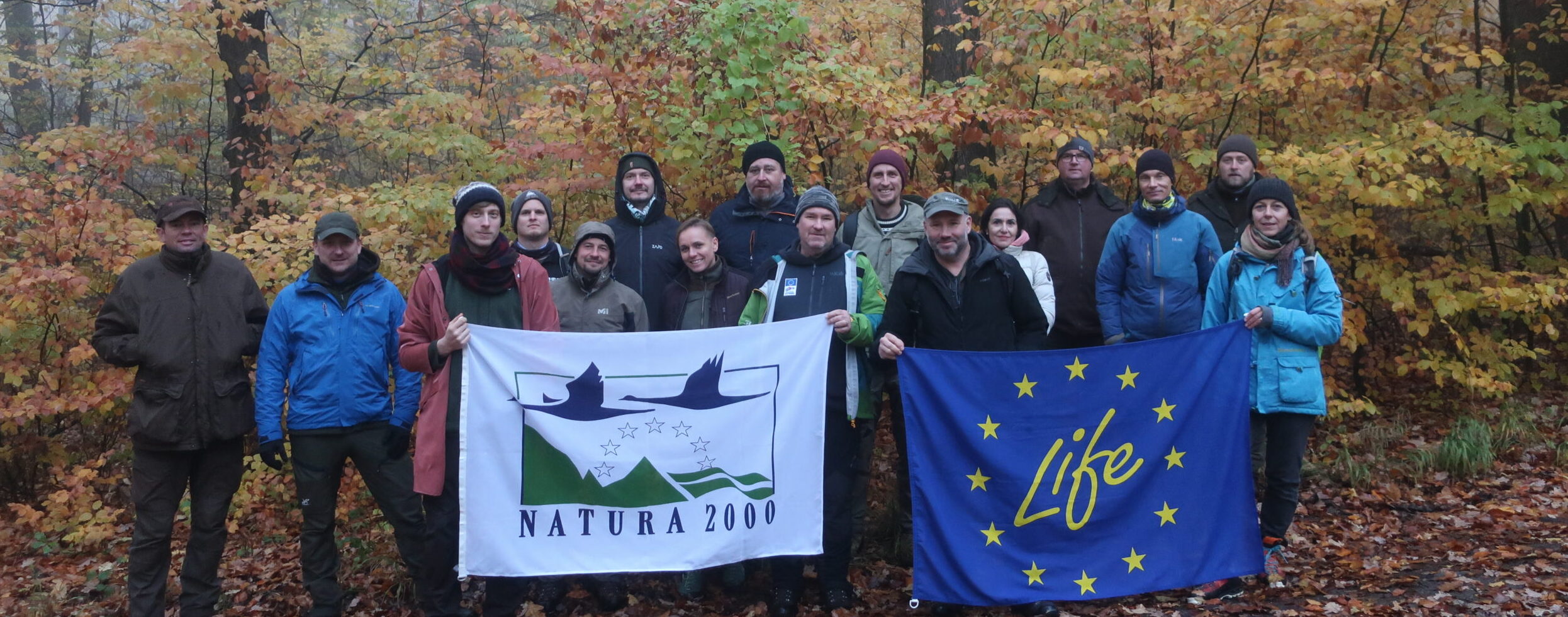

We held our 7th project meeting in Budapest on 9 November 2026. On the first day, team members shared their respective actions and the progress made so far. We discussed the various stages of the project in details, as well as the tasks ahead in the upcoming months.
The project meeting was followed by a study visit held on 10 and 11 November as part of the project, which was also open to other interested stakeholders. The central themes were the presentation of Hungarian best practices in close-to-nature forest management and the management of urban forests in the face of climate change.
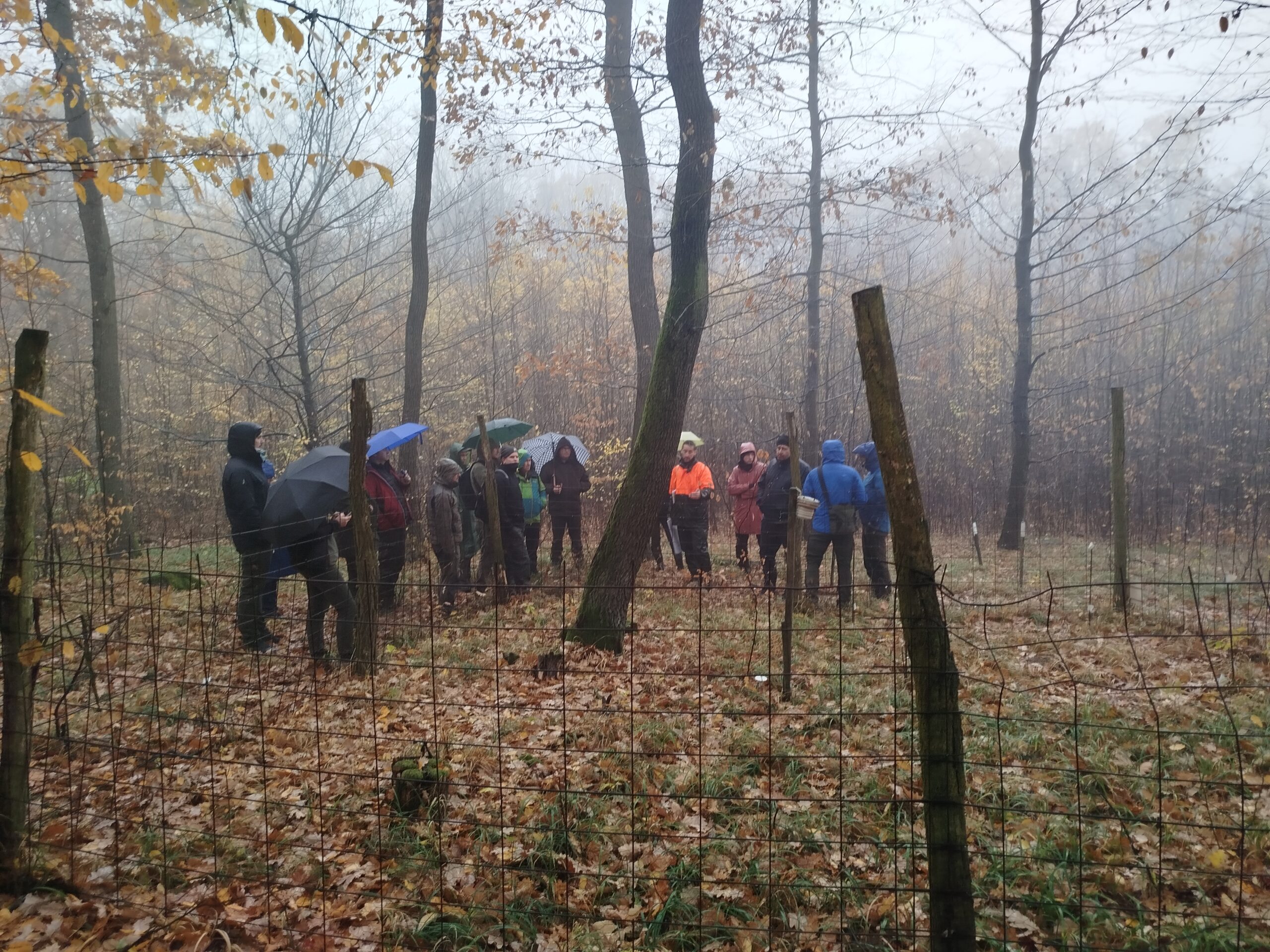
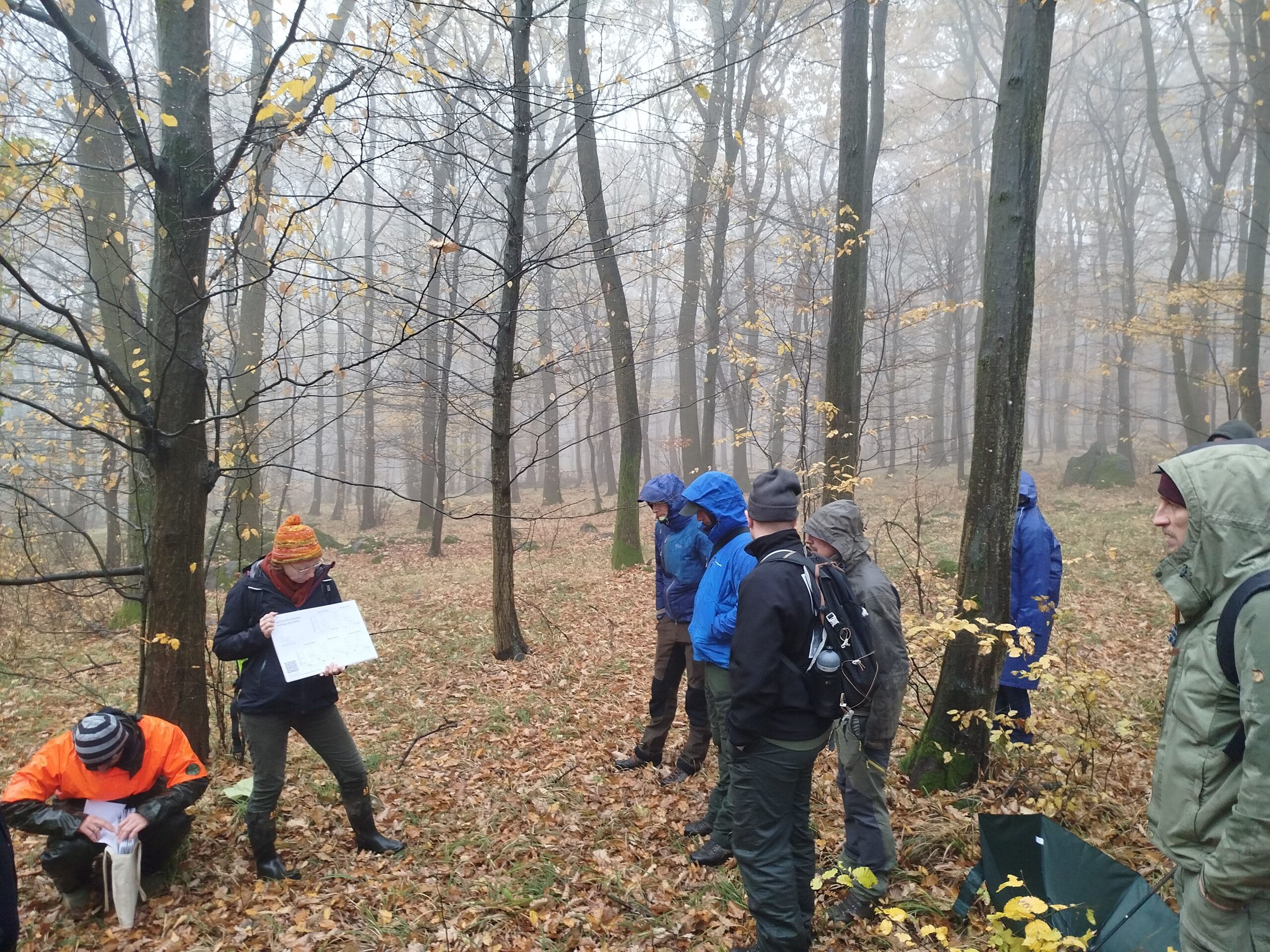
During the first part of the first day, we visited two forest ecology experimental sites established through a collaboration between the HUN-REN Centre for Ecological Research and Pilisi Parkerdő Zrt.:
- The Pilis Forest Management Experiment, which compares elements of traditional rotation forestry (clear-cut areas, retention tree groups and uniform shelterwood systems) with elements of continuous cover forestry (gap cutting).
- The Pilis Gap Experiment, which investigates the effects of gaps of different sizes and shapes used in continuous cover forestry.
Both experiments were presented by researchers from the Centre for Ecological Research, Dr Flóra Tinya and Dr Bence Kovács. Particular emphasis was placed on evaluating the effects of different forestry interventions in terms of the climate adaptation of managed forests.
In the afternoon, Dr Péter Csépányi, Deputy CEO of Pilisi Parkerdő Zrt., gave us a practical demonstration in an almost 10-hectare beech forest that has been managed according to Pro Silva principles under a continuous cover forestry system since 1999. The main topics included the development of uneven-aged stands with continuous forest cover, climate adaptation and natural regeneration in forest gaps.
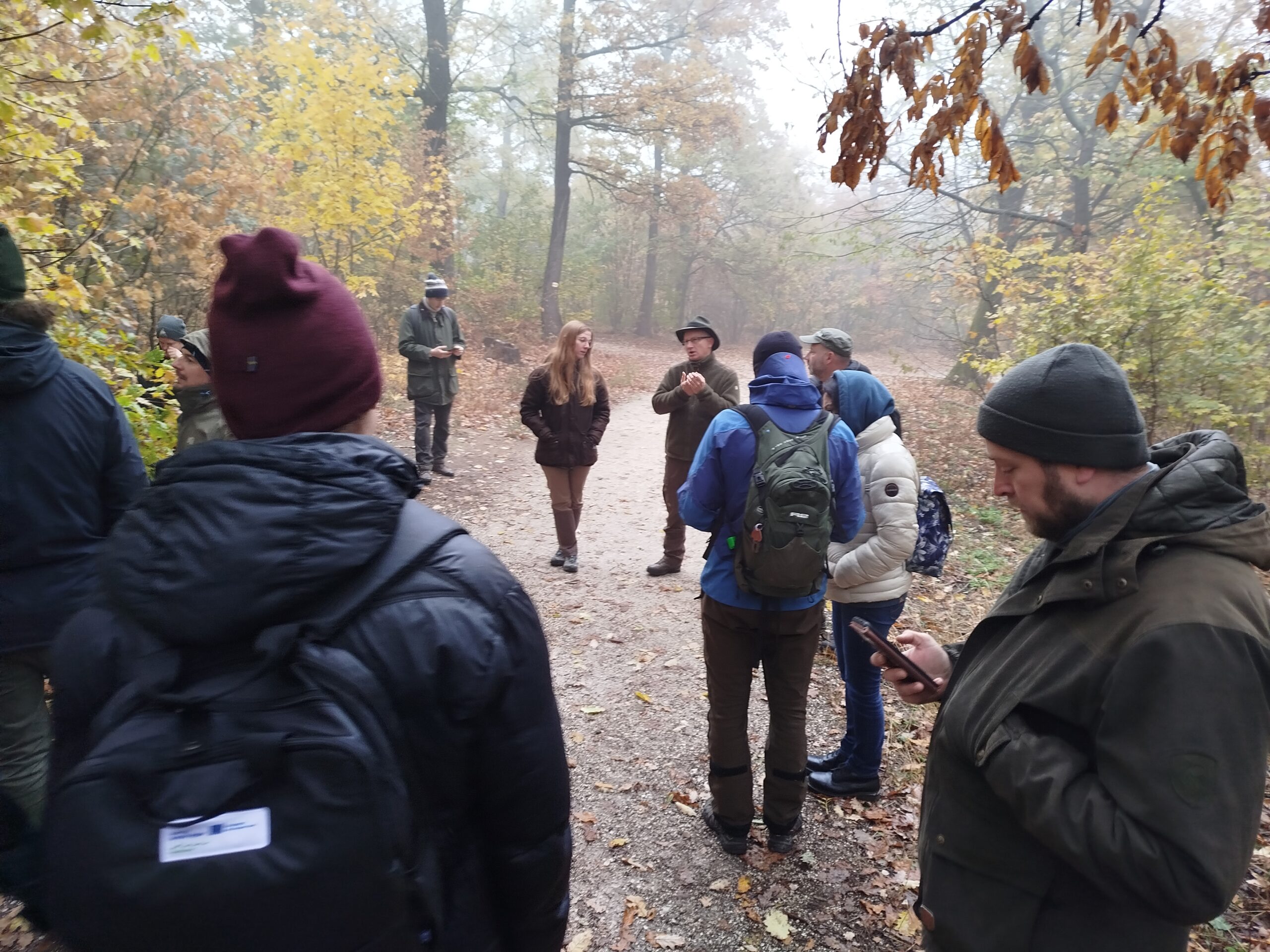
The following morning, at Hárs-hegy in Budapest, we had the opportunity to learn about good practices in urban forest management, hosted by István Rittling, Head of Forestry, and Vivien Karácsonyi, Technical Manager. We explored how forests are being prepared for the combined impacts of climate change and the pressures of a large city, through maintaining continuous forest cover and increasing age-class and tree species diversity.
We also discussed how to balance nature conservation and recreational needs, as Budapest’s forests receive 18 million visits annually – 200 times the national average.
In the afternoon, Gábor Németh, a forest engineer at Normafa Park, guided us around the Normafa area. This forest is particularly remarkable, as it is considered one of the most valuable forests in terms of both nature conservation and historical heritage, not only in Budapest but in the entire country. Climate change and increasing human presence also pose significant challenges for the management of the area’s mature forests.